Screw Size Guide: A Comprehensive Overview (Updated 03/14/2026)
Navigating screw sizes can be complex! This guide details U.S. and metric standards‚ conversion charts‚ and thread types for successful project completion.
Understanding screw sizing is fundamental to any successful construction‚ repair‚ or manufacturing project. Screws aren’t simply “small‚” “medium‚” or “large”; they adhere to standardized systems ensuring compatibility and proper function. The initial step involves recognizing that the first number often indicates the screw gauge‚ representing the outside thread diameter – also known as the major diameter.
For screws with a major diameter less than 1/4 inch‚ sizing typically ranges from 0 to 14. Larger screws are generally designated by a number indicating the diameter in eighths of an inch (e.g.‚ a #6 screw has a diameter of 6/8 or 3/4 inch). Accurate screw selection prevents issues like stripping‚ weakening the joint‚ or material damage.
Furthermore‚ knowing whether you need a U.S. standard or metric screw is crucial‚ as these systems are not interchangeable. This guide will provide the necessary tools and information to confidently choose the correct screw measurements for your specific application‚ ensuring a secure and lasting result.

Understanding Screw Gauges & Major Diameter
The screw gauge directly correlates to the screw’s outer thread diameter‚ formally termed the major diameter. This is the largest diameter of the screw thread. For screws under 1/4 inch‚ the gauge is represented by a number from 0 to 14‚ where a higher number signifies a larger diameter. It’s essential to remember this isn’t a direct measurement in inches; it’s a sizing convention.
Screws 1/4 inch and larger are typically designated by a number indicating the diameter in eighths of an inch. For example‚ a #6 screw has a 3/4-inch diameter. Accurately identifying the major diameter is critical for ensuring proper fit within a tapped hole or when using a nut.
Using the wrong gauge can lead to several problems‚ including thread stripping‚ insufficient clamping force‚ and ultimately‚ project failure. Understanding this fundamental aspect of screw sizing is the first step towards successful fastening and reliable construction.
U.S. Standard Screw Sizes
U.S. standard screw sizes are commonly identified using a numbering system‚ particularly for smaller diameters. Screws smaller than 1/4 inch utilize numbers from 0 to 14‚ where each number corresponds to a specific diameter. A #6 screw‚ for instance‚ has a diameter of approximately 3/8 inch. Larger screws‚ 1/4 inch and above‚ are typically designated by a number representing the diameter in eighths of an inch – a #12 screw is 12/8‚ or 1.5 inches.
Conversion tables are invaluable when working with these sizes‚ allowing you to easily translate between the numbering system and decimal or fractional diameters. These charts ensure you select the correct screw for your application‚ preventing issues like improper fit or thread damage.
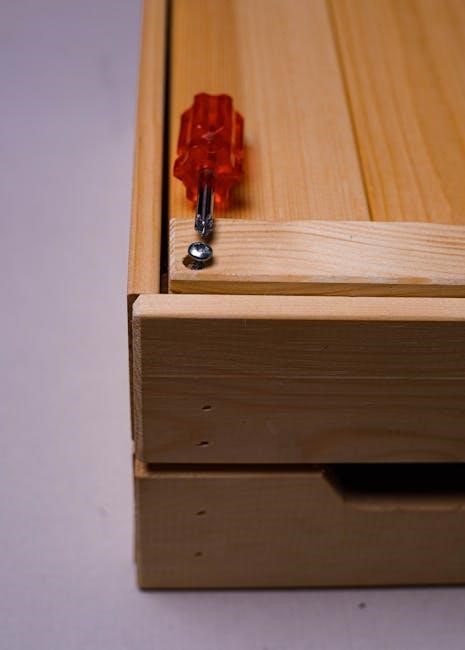
Remember to consider both diameter and length when choosing a U.S. standard screw‚ as these dimensions work together to provide the necessary fastening strength and security for your project.
Screw Size Conversion Tables
Accurate screw selection hinges on reliable conversion tables. These resources bridge the gap between different measurement systems – imperial (fractional and decimal) and metric (millimeters). A comprehensive table will display equivalent diameters and lengths‚ facilitating seamless transitions between the two standards.
For example‚ a table might show that a #8-32 screw (U.S. standard) is approximately equivalent to a 4.2mm metric screw. Lengths are similarly converted‚ allowing for precise replacements or adaptations. Utilizing these tables minimizes errors and ensures compatibility when combining fasteners from different regions or manufacturers.
Online resources and fastener suppliers often provide downloadable charts. Always verify the table’s accuracy and scope‚ as some may focus on specific screw types or ranges. Proper conversion is crucial for project success and structural integrity.

Metric Screw Sizes
Metric fasteners utilize millimeters for dimensions. DIN 931 standards define hex head cap screw dimensions‚ while machine screw sizes are commonly specified by length and diameter.
Metric Bolt Sizes & Dimensions (DIN 931)
DIN 931 specifies dimensions for hex head cap screws‚ a frequently used metric fastener. These bolts feature a hexagonal head and are fully threaded. Understanding these specifications is crucial for ensuring compatibility and proper assembly in various engineering applications. Key dimensions include the diameter (measured in millimeters)‚ pitch (distance between threads‚ also in millimeters)‚ and head size.
Common metric bolt sizes range from M3 to M24‚ though larger sizes are available. The ‘M’ designation indicates a metric thread. For example‚ an M8 bolt has a nominal diameter of 8 millimeters. Pitch is often represented as a number following the diameter (e.g.‚ M8 x 1.25)‚ indicating 1.25 millimeters between threads.
Bolt Depot and other engineering resource sites provide detailed charts outlining these dimensions. These charts typically include information on head height‚ across-flats size (the distance across opposite sides of the hex head)‚ and thread length. Accurate dimensions are vital for selecting the correct bolt for a given application‚ ensuring secure fastening and preventing damage to components.
Standard Metric Machine Screw Sizes
Metric machine screws are widely used for joining materials in a variety of applications‚ offering precision and reliability. Length measurement begins from the underside of the head to the tip of the screw‚ crucial for proper engagement. Common sizes typically range from small diameters like 3mm x 0.5mm up to larger ones like 6mm x 1.0mm‚ representing diameter and pitch respectively.
These screws are fully threaded along their length‚ distinguishing them from bolts which often have a partially threaded shank. Standard materials include stainless steel and various grades of carbon steel‚ selected based on strength and corrosion resistance requirements. Charts detailing these sizes are readily available from suppliers like Bolt Depot‚ offering comprehensive specifications.
Selecting the correct size involves considering both the diameter and length needed to securely fasten the materials. Accurate measurements and referencing reliable size charts are essential for a successful assembly‚ preventing issues like stripping or insufficient holding power.
Metric Tap Sizes & Drill Bit Sizes
Creating threads in materials requires precise coordination between tap and drill bit sizes. Metric tap charts provide essential data‚ listing tap sizes alongside recommended drill bit sizes for both tapping and clearance holes. These charts specify dimensions in inches‚ ensuring accurate thread creation and preventing damage to the material or tap.
Tapping involves using a tap to cut internal threads‚ while clearance holes are drilled to allow the screw to pass through without engaging. Selecting the correct drill bit size is critical; too small‚ and the tap may bind or break‚ too large‚ and the threads will be weak.
Resources offer comprehensive specification data for various metric screw sizes‚ guiding users through the process. Understanding these relationships is fundamental for successful metric threading‚ ensuring a secure and durable connection. Always consult a reliable chart before beginning any tapping operation.
Screw Thread Types
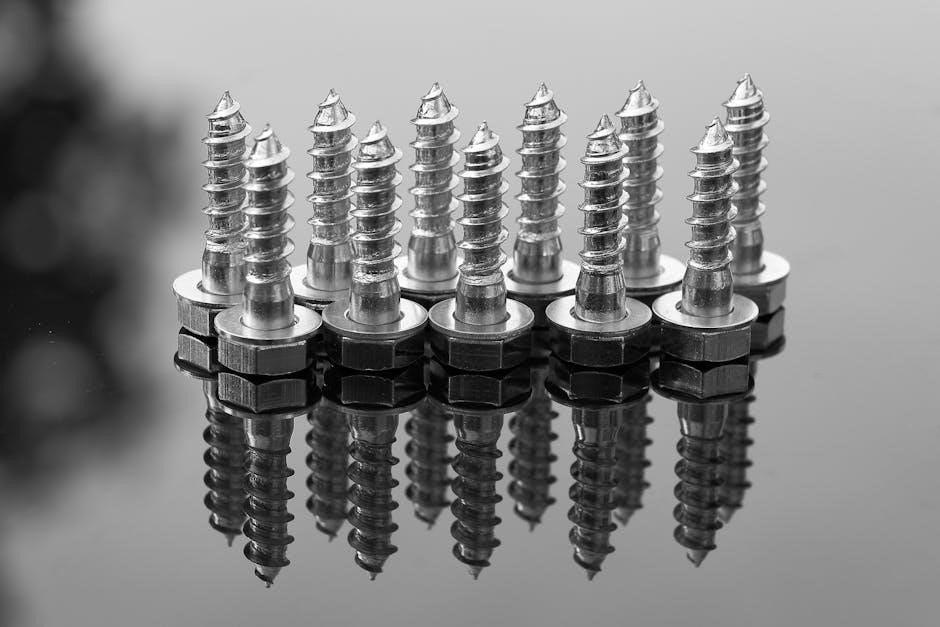
Different applications demand specific screw types. Machine screws‚ wood screws‚ and self-tapping screws each possess unique characteristics suited for various materials and fastening needs.

Machine Screws vs. Wood Screws
Machine screws and wood screws‚ while both fasteners‚ are designed for distinctly different applications and materials. Machine screws are typically used to fasten metal parts together‚ relying on a pre-tapped hole or a nut to create a secure connection. They feature a uniform diameter along the threaded portion and are often made of metal alloys for strength.
Wood screws‚ conversely‚ are specifically designed to penetrate and hold within wood. They possess a tapered shank and coarser threads‚ enabling them to bite into the wood fibers and create a strong‚ self-tapping hold. The threads extend partially up the shank‚ providing greater holding power within the wood. Wood screws generally don’t require a pre-drilled hole‚ though one is often recommended to prevent splitting‚ especially in hardwoods.
Key differences also lie in their head styles and drive types. Machine screws commonly feature flat‚ pan‚ or oval heads‚ accepting slotted‚ Phillips‚ or hex drives. Wood screws often have flat‚ round‚ or oval heads‚ and are frequently driven with Phillips or slotted drivers. Selecting the correct screw type is crucial for a durable and reliable fastening solution.
Self-Tapping Screws & Their Sizes
Self-tapping screws are incredibly versatile fasteners designed to create their own threads as they are driven into a material‚ eliminating the need for pre-tapped holes. They are commonly used in sheet metal‚ plastic‚ and sometimes even wood‚ offering a quick and efficient fastening solution.
Sizes are typically designated by a number indicating the gauge (diameter) and the threads per inch (TPI). Common sizes range from #6 to #12‚ with smaller numbers representing larger diameters. Length is measured from the underside of the head to the tip. Different point styles – like Type A‚ AB‚ and B – determine the material suitability; Type A for thin sheet metal‚ AB for heavier gauge‚ and B for plastic or softer metals.
Choosing the correct size depends on the material thickness and desired holding strength. A general rule is to select a screw length at least twice the material thickness. Proper selection ensures a secure and lasting connection‚ preventing stripping or damage to the material. Always consult size charts for specific applications.
Sheet Metal Screws – Size Considerations
Sheet metal screws‚ designed for joining thin metallic materials‚ require careful size consideration for optimal performance. Unlike wood screws‚ they typically have sharp threads running the full length of the screw‚ enabling them to tap their own threads. Size designation often follows a numbering system (#6‚ #8‚ #10‚ etc.)‚ where lower numbers indicate larger diameters.
Selecting the appropriate gauge (diameter) is crucial; too small‚ and the screw won’t hold; too large‚ and it risks stripping the metal. Length is measured from under the head to the tip and should be at least 1.5 times the combined thickness of the materials being joined. Point styles – acute‚ blunt‚ and self-drilling – influence material penetration.
Consider the material’s thickness and the required holding power when choosing. For thicker sheets‚ self-drilling screws are beneficial. Always refer to size charts and material compatibility guides to ensure a secure and reliable fastening solution‚ preventing issues like pull-out or damage.

Screw Measurement Units
Screw sizes are defined by imperial (fractional/decimal) and metric (millimeters) systems. Conversion between these is essential for compatibility and accurate project execution.
Imperial (Fractional & Decimal) Screw Sizes
U.S. standard screws utilize both fractional and decimal inch measurements. Screws under 1/4 inch diameter are commonly designated by numbers 0 through 14‚ where a higher number indicates a larger diameter. These numbered screws correlate to specific fractional sizes; for example‚ a #6 screw is approximately 1/4 inch in diameter.
Larger screws‚ 1/4 inch and above‚ are typically specified using fractional inch measurements (e.g.‚ 1/4‚ 3/8‚ 1/2 inch). Decimal equivalents are also frequently used for precision. Understanding this dual system is crucial for selecting the correct screw. The major diameter‚ representing the outer thread diameter‚ is the primary measurement used to identify imperial screw sizes. Accurate identification ensures proper fit and functionality within your assembly. Charts detailing these conversions are readily available for quick reference‚ aiding in seamless project execution.
Metric Screw Sizes (Millimeters)
Metric screws are standardized using millimeters (mm) for diameter and pitch. Unlike imperial systems‚ metric sizing is consistently decimal-based‚ simplifying conversions. Common metric screw diameters include 3mm‚ 4mm‚ 5mm‚ 6mm‚ 8mm‚ and 10mm‚ with finer pitches (distance between threads) denoted by numbers like 0.5mm or 1.0mm.
DIN 931‚ a widely recognized standard‚ specifies dimensions for metric hex head cap screws. Length is measured from beneath the head to the tip of the screw. Precise metric measurements are vital for international compatibility and ensuring proper fastening in applications designed for metric hardware. Detailed charts provide comprehensive specifications‚ including major diameters‚ thread pitches‚ and corresponding drill sizes for tapping. Utilizing these resources guarantees accurate selection and optimal performance in your projects‚ avoiding compatibility issues.

Converting Between Imperial and Metric
Converting between imperial (inch) and metric (millimeter) screw sizes isn’t always exact‚ as the systems use different measurement philosophies. Charts are essential tools for approximate conversions; however‚ direct equivalents rarely exist. For example‚ a ¼ inch screw roughly equates to 6mm‚ but slight variations occur.
Conversion tables list imperial diameters with their nearest metric counterparts. When precision is critical‚ it’s best to convert to decimal inches first‚ then to millimeters (25.4mm = 1 inch). Remember that thread pitch also needs consideration. Using a conversion chart ensures you select a metric screw that closely matches the original imperial size‚ minimizing issues with fit and functionality. Always prioritize the intended application and consider slight adjustments if a perfect match isn’t available‚ ensuring a secure and reliable fastening solution.
Practical Applications & Size Selection
Choosing the correct screw involves material‚ load‚ and environment. Proper length prevents protrusion‚ while diameter ensures sufficient strength for your specific project needs.
Choosing the Right Screw for Your Project
Selecting the appropriate screw is crucial for project integrity. Consider the materials being joined – wood‚ metal‚ or plastic – as this dictates the necessary screw type. Machine screws excel in metal-to-metal applications‚ demanding precision‚ while wood screws are designed for softer materials‚ featuring a tapered shank and coarser threads.
Self-tapping screws simplify assembly by creating their own threads‚ ideal for sheet metal or plastic. Evaluate the load-bearing requirements; larger diameter screws offer greater strength. The environment also plays a role; stainless steel screws resist corrosion in damp conditions.
Furthermore‚ understand the screw’s intended function. Is it for a structural connection‚ or simply to hold components in place? A comprehensive understanding of these factors ensures a secure and lasting result. Don’t hesitate to consult screw size charts and specifications for guidance‚ ensuring your project benefits from the correct fastener.
Screw Length Measurement
Accurate screw length is paramount for a secure and flush finish. Screw length is typically measured from beneath the head to the tip of the screw. However‚ for machine screws‚ length is determined from the underside of the head to the thread’s end‚ assuming the surface is contacted by the head.
When selecting length‚ account for the thickness of the materials being joined‚ plus sufficient thread engagement. Insufficient length compromises holding power‚ while excessive length protrudes and poses a safety hazard. Consider the head type; flat heads require countersinking‚ adding to the overall length needed.
Metric screw lengths are consistently measured in millimeters. Always double-check specifications and utilize a reliable measuring tool to ensure accuracy. Proper length selection prevents stripping‚ breakage‚ and ensures a professional‚ durable assembly. Refer to detailed charts for specific applications.
Resources for Screw Size Charts & Specifications
Finding reliable screw size information is crucial for any project. Bolt Depot (boltdepot.com) provides extensive charts detailing metric and standard screw thread dimensions‚ diameters‚ and types‚ including DIN 931 specifications for hex head cap screws. Their resources cover recommended tap drill and clearance drill sizes‚ aiding precise hole preparation.
Various online engineering tool websites offer comprehensive metric bolt size charts‚ facilitating conversions and selections. Searching for “metric thread chart” yields user-friendly guides with detailed specifications for numerous screw sizes. Additionally‚ fastener manufacturers often publish detailed catalogs and specifications on their websites.
For conversion needs‚ dedicated metric-to-imperial screw size charts are readily available online. Remember to verify information across multiple sources to ensure accuracy and suitability for your specific application. Always prioritize official manufacturer data when available.