
A Streetcar Named Desire PDF: A Comprehensive Guide (Updated 04/07/2026)
Navigating digital resources, finding reliable “A Streetcar Named Desire” PDFs is crucial for students and enthusiasts alike.
Accessing the play’s text facilitates in-depth analysis and study.
Tennessee Williams’s A Streetcar Named Desire, penned in 1947, remains a cornerstone of American dramatic literature. The play powerfully explores themes of societal change, illusion versus reality, and the fragility of the human psyche. Its enduring impact stems from its complex characters and unflinching portrayal of desire and desperation.
The story centers on Blanche DuBois, a Southern belle clinging to a fading aristocratic past, as she arrives in New Orleans to stay with her sister, Stella, and Stella’s husband, Stanley Kowalski. This encounter sets in motion a collision of worlds and values, ultimately leading to Blanche’s tragic downfall.
Understanding the play requires access to the full text, making readily available PDF versions invaluable for students, researchers, and theatre enthusiasts. These digital formats offer portability and ease of study, allowing for detailed analysis of Williams’s poetic language and nuanced character development.
The Significance of the PDF Format
PDFs offer unparalleled convenience for engaging with A Streetcar Named Desire. Their portability allows study on various devices – laptops, tablets, and smartphones – facilitating access anytime, anywhere. Unlike physical copies, PDFs are easily searchable, enabling quick location of specific quotes or scenes crucial for analysis.
Furthermore, PDFs support annotation features, allowing students to highlight key passages, add notes, and engage directly with the text. This interactive element enhances comprehension and retention. Digital copies also eliminate concerns about damage or loss inherent with physical books.
For academic purposes, PDFs streamline research and citation. They provide a stable, consistent format, ensuring accurate referencing. Accessing a reliable “A Streetcar Named Desire” PDF is therefore essential for effective study and scholarly exploration.
Historical Context of the Play
Tennessee Williams’ A Streetcar Named Desire, debuting in 1947, powerfully reflects post-World War II America. The play grapples with societal shifts, including evolving gender roles and the decline of the Old South’s aristocratic values. A “Streetcar Named Desire” PDF allows focused study of these themes.
The era witnessed increased industrialization and urbanization, contrasting sharply with the fading gentility embodied by Blanche DuBois. The play’s setting in New Orleans, a city steeped in history yet undergoing modernization, underscores this tension. Examining the play through a historical lens, aided by a digital text, reveals Williams’ critique of a changing nation.
Understanding this context enriches appreciation for the characters’ struggles and the play’s enduring relevance. Accessing a PDF facilitates detailed analysis of these historical undercurrents.

Characters and Their Symbolism
A “Streetcar Named Desire” PDF unlocks deeper understanding of complex characters like Blanche and Stanley. Analyzing their symbolic weight enhances the play’s thematic resonance.
Blanche DuBois: A Detailed Analysis
Utilizing a “Streetcar Named Desire” PDF allows for meticulous examination of Blanche DuBois’s character arc. Her descent into delusion, fueled by past traumas and societal pressures, becomes strikingly apparent through textual analysis. The PDF format facilitates close reading of her dialogue, revealing layers of fragility and constructed identity.
Students can trace Blanche’s reliance on illusion as a coping mechanism, contrasting her idealized self-perception with the harsh realities presented by Stanley. A digital text enables easy annotation and comparison of key scenes, highlighting the symbolism associated with her attire, bathing rituals, and interactions with others. The PDF’s search function aids in identifying recurring motifs related to Blanche’s fading Southern Belle status and desperate search for acceptance.
Stanley Kowalski: Brutality and Masculinity
A “Streetcar Named Desire” PDF is invaluable when dissecting Stanley Kowalski’s complex portrayal of working-class masculinity. The text reveals his primal instincts and possessiveness, contrasting sharply with Blanche’s refined sensibilities. Accessing the play digitally allows for focused analysis of his aggressive behavior and dominance within the domestic sphere.
Students can readily identify instances of Stanley’s verbal and physical intimidation, tracing the escalation of conflict with Blanche. The PDF format enables side-by-side comparison of his interactions with Stella, exposing the power dynamics within their relationship. Annotating the text highlights the symbolism of his physicality – his bowling, his drinking – and how these elements contribute to his representation of raw, unapologetic masculinity.
Stella Kowalski: Torn Between Worlds
Utilizing a “Streetcar Named Desire” PDF provides a crucial lens for understanding Stella Kowalski’s internal conflict. The digital text allows for close reading of her dialogue, revealing her struggle between her working-class life with Stanley and the fading gentility represented by Blanche. Annotating the PDF highlights Stella’s attempts to reconcile these opposing forces, showcasing her loyalty and vulnerability.
Students can trace Stella’s shifting allegiances throughout the play, analyzing her justifications for remaining with Stanley despite his brutality. The PDF format facilitates detailed examination of her emotional responses to both characters, exposing the complexities of her desires and fears. Accessing the full text aids in deciphering her ultimate choice and its tragic consequences.
Mitch: The Search for Authenticity
A “Streetcar Named Desire” PDF is invaluable when dissecting Mitch’s character arc and his yearning for genuine connection. The readily available text allows readers to meticulously examine his interactions with Blanche, noting his vulnerability and desire for a relationship built on honesty. Digital annotation features enable highlighting key passages revealing his disillusionment with superficiality.
The PDF format supports a focused study of Mitch’s rejection of Blanche upon discovering her fabricated past. Students can analyze his dialogue, tracing his shift from hopeful suitor to a man demanding truth. Access to the complete script facilitates understanding his motivations and the societal pressures influencing his choices, ultimately revealing his tragic inability to find authenticity.

Plot Summary and Key Scenes
A “Streetcar Named Desire” PDF unlocks detailed scene analysis, charting Blanche’s descent and the escalating tensions with Stanley.
It provides a complete narrative for comprehensive understanding.
Act I: The Arrival and Initial Tensions
Utilizing a “Streetcar Named Desire” PDF during Act I reveals Blanche DuBois’s fragile state upon arriving at Stella and Stanley’s New Orleans apartment. The PDF allows close reading of dialogue, highlighting Blanche’s carefully constructed illusions and her immediate clash with Stanley’s primal nature.
Readers can trace the initial power dynamics established – Stanley’s dominance over his home and Stella’s attempts to mediate. The PDF format facilitates annotation, marking key moments of foreshadowing and symbolic imagery, like the paper lantern, which represents Blanche’s attempts to conceal reality.
Accessing the full text through a PDF enables a deeper understanding of the subtle tensions brewing beneath the surface, setting the stage for the play’s tragic unfolding. It’s a crucial tool for dissecting the characters’ motivations and the play’s central conflicts.
Act II: Escalating Conflict and Revelations
A “Streetcar Named Desire” PDF proves invaluable during Act II, as the conflict between Blanche and Stanley intensifies. The PDF allows for meticulous examination of Stanley’s investigation into Blanche’s past, revealing damaging truths about her life in Laurel.
Readers can follow the escalating tension through detailed textual analysis, noting the power imbalances and Stanley’s increasingly aggressive behavior. The PDF format supports highlighting key scenes, such as the poker night, where Blanche’s vulnerability is exposed and the cracks in her facade begin to widen.
Having the complete text readily available aids in understanding the significance of Mitch’s growing disillusionment and the unraveling of Blanche’s carefully constructed world. It’s essential for tracing the play’s descent into tragedy.
Act III: The Climax and Blanche’s Breakdown
A “Streetcar Named Desire” PDF becomes paramount in dissecting the devastating climax of Act III. The PDF facilitates close reading of Stanley’s brutal rape of Blanche, a pivotal moment demanding careful consideration of its implications.
Students can analyze the dialogue and stage directions with precision, understanding the full weight of Blanche’s psychological collapse. The PDF allows for repeated review of key passages, revealing the layers of trauma and despair.
Tracing Blanche’s final descent into madness, aided by the PDF’s accessibility, highlights the play’s tragic themes. The concluding scene, with Blanche’s removal to a mental institution, is profoundly impactful when studied through the complete textual context provided by the PDF.

Themes Explored in the Play
A “Streetcar Named Desire” PDF unlocks nuanced exploration of central themes like illusion versus reality, societal decline, and the destructive power of desire.
Illusion vs. Reality
Utilizing a “Streetcar Named Desire” PDF allows for close textual analysis revealing Blanche DuBois’s desperate construction of illusions to shield herself from harsh realities. Her fabricated past, embellished stories, and reliance on superficial charm are readily apparent within the text.
The PDF format facilitates detailed examination of Blanche’s interactions, highlighting the stark contrast between her perceived elegance and the decaying Belle Reve plantation—a symbol of lost grandeur. Students can easily trace the unraveling of her illusions as Stanley relentlessly exposes her deceptions.
Furthermore, the PDF enables comparative study of Blanche’s internal world, as expressed through her dialogue, and the objective reality presented by other characters, particularly Stanley. This comparative analysis deepens understanding of the play’s central conflict and Blanche’s tragic fate.
The Decline of the Southern Belle
A “Streetcar Named Desire” PDF is invaluable for studying Blanche DuBois as a representation of the fading Southern Belle archetype; The text vividly portrays the economic and social shifts impacting the Southern aristocracy post-Civil War, contributing to their decline.
The PDF format allows readers to meticulously examine Blanche’s clinging to outdated social codes and her desperate attempts to maintain a facade of gentility in a changing world. Her reliance on charm and appearance, contrasted with Stanley’s pragmatic masculinity, becomes strikingly clear.
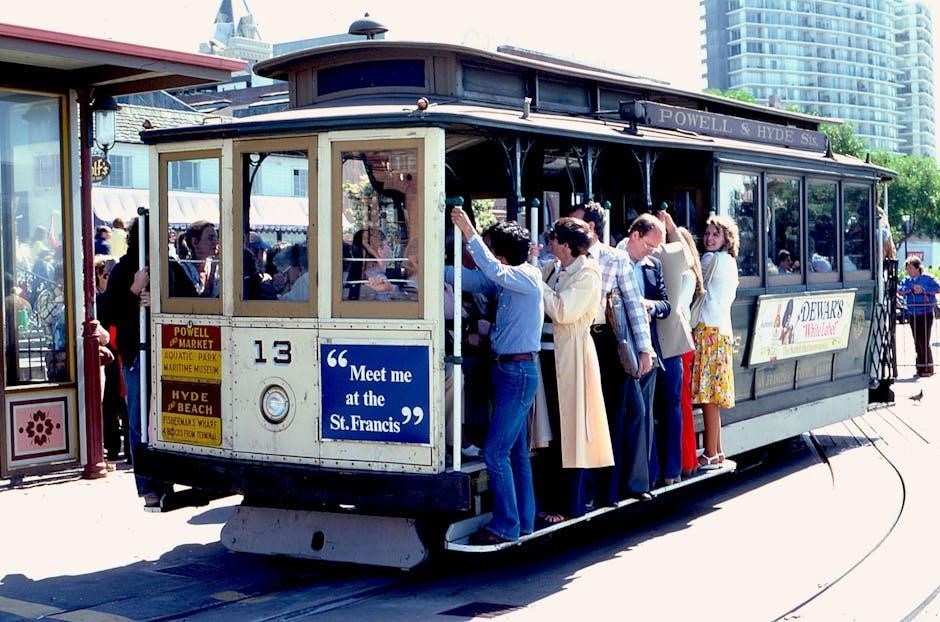
Through the PDF, one can trace the loss of Belle Reve as symbolic of the South’s lost fortunes and the subsequent vulnerability of women like Blanche, who were unprepared for economic independence. The text underscores the tragic consequences of a bygone era.
Sexuality and Desire
A “Streetcar Named Desire” PDF provides a crucial lens for analyzing the complex interplay of sexuality and desire within the play. The text reveals how societal expectations and repressed desires shape the characters’ actions and relationships.
The PDF format facilitates close reading of scenes depicting Stanley’s raw, physical dominance and Blanche’s attempts to navigate a world where female sexuality is often controlled or condemned. It highlights the tension between desire and societal constraints.
Examining the text through a PDF allows for detailed study of Mitch’s vulnerability and his search for genuine connection, contrasted with Stanley’s possessive nature. The play’s exploration of taboo subjects becomes more apparent, revealing the characters’ internal conflicts.
Social Class and Power Dynamics
A “Streetcar Named Desire” PDF is invaluable for dissecting the play’s stark portrayal of social class and the resulting power dynamics. The digital text allows for focused analysis of how these forces shape the characters’ interactions and destinies.
The PDF format enables close examination of the contrast between Blanche’s fading aristocratic background and the Kowalski’s working-class reality. It reveals how Stanley asserts dominance through physical strength and economic power, challenging Blanche’s illusions.
Studying the play via PDF highlights the societal pressures and prejudices that contribute to Blanche’s downfall. The text underscores the vulnerability of those lacking social standing, and the brutal consequences of class conflict.

Analyzing the Play’s Literary Devices
A “Streetcar Named Desire” PDF unlocks detailed study of Williams’ masterful use of symbolism, irony, and foreshadowing, enhancing comprehension and critical analysis.
Symbolism in “A Streetcar Named Desire”
Utilizing a “Streetcar Named Desire” PDF allows for focused examination of the play’s rich symbolic tapestry. The streetcar itself, a recurring motif, embodies Blanche’s descent and the relentless passage of time. Light and darkness are powerfully contrasted; Blanche avoids direct light, symbolizing her attempts to conceal her past and illusions.
The Kowalski’s apartment, a cramped and vibrant space, represents Stanley’s primal energy and dominance, contrasting sharply with Blanche’s fading aristocratic world. Paper lanterns diffuse the light, mirroring Blanche’s fragile attempts to create a romanticized reality. A PDF version facilitates close reading, enabling students to trace these symbols and understand their contribution to the play’s complex themes of illusion, desire, and societal decay.
The Use of Dramatic Irony
A “Streetcar Named Desire” PDF is invaluable for dissecting Williams’ masterful employment of dramatic irony. The audience is often privy to information characters are not, creating tension and foreshadowing Blanche’s tragic fate. We know of her fabricated past and declining mental state, while Stanley remains largely unaware, fueling his suspicions and ultimately, her downfall.
This disparity between knowledge held by the audience and characters heightens the emotional impact of key scenes. A digital PDF allows for easy annotation and revisiting of moments where dramatic irony is prominent. Analyzing these instances reveals Williams’ commentary on societal expectations, deception, and the destructive power of truth. The PDF format aids in tracing the subtle cues and layered meanings embedded within the dialogue.
Foreshadowing and its Impact
Utilizing a “Streetcar Named Desire” PDF unlocks a deeper understanding of Tennessee Williams’ skillful use of foreshadowing. From the opening scene, subtle hints predict Blanche’s eventual breakdown and loss of reality. The constant references to darkness, shadows, and the moth symbolize her fragility and attraction to destructive forces.
A digital PDF facilitates close reading, allowing students to track recurring motifs and symbolic imagery. These elements subtly prepare the audience for the play’s tragic conclusion. The play’s structure itself foreshadows Blanche’s fate, building tension with each revelation. Examining these instances within a readily accessible PDF enhances comprehension of Williams’ dramatic technique and thematic concerns, revealing the inevitability of Blanche’s demise.

Finding and Utilizing “A Streetcar Named Desire” PDFs
Accessing “A Streetcar Named Desire” PDFs requires discerning legitimate sources from unreliable ones, ensuring quality texts for academic study and personal enjoyment.
Legitimate Sources for PDF Downloads
Securing a reliable PDF of Tennessee Williams’ “A Streetcar Named Desire” necessitates utilizing trustworthy sources. University library databases often provide access to scholarly editions, ensuring accuracy and proper formatting for academic purposes. Project Gutenberg, a repository of free ebooks, may offer the play, though verifying the edition’s quality is essential;
Reputable online bookstores, like Barnes & Noble or Amazon, frequently sell PDF versions alongside physical copies, guaranteeing a legally obtained and professionally prepared text. Avoid websites promising free downloads from questionable origins, as these may contain malware or inaccurate transcriptions. Always prioritize sources that respect copyright laws and offer a clear indication of the text’s provenance. Checking for ISBN numbers can also help verify authenticity.
Free vs. Paid PDF Versions
The availability of “A Streetcar Named Desire” PDFs spans a spectrum from free to paid options, each with distinct advantages and drawbacks. Free PDFs, often found on open-access websites, may lack the editorial rigor of paid versions, potentially containing errors or incomplete text. They might also infringe on copyright, posing legal and ethical concerns.
Paid PDFs, typically purchased from reputable booksellers or academic databases, guarantee accuracy, proper formatting, and adherence to copyright regulations. These versions often include supplementary materials like critical essays or character analyses, enhancing the study experience. While free options offer accessibility, paid PDFs provide a more reliable and comprehensive resource for serious students and researchers, justifying the investment for quality and legality.
Using PDFs for Academic Study
“A Streetcar Named Desire” PDFs are invaluable tools for academic study, offering portability and convenient access to the text. Digital versions facilitate annotation, highlighting, and keyword searching, streamlining the analysis process. Students can easily quote passages for essays and presentations, enhancing research efficiency.
However, responsible PDF usage is crucial. Always cite the source correctly to avoid plagiarism and ensure academic integrity. Utilizing features like text-to-speech can aid comprehension, while cross-referencing with scholarly articles deepens understanding. PDFs, when used ethically and effectively, become powerful assets for exploring the play’s themes, characters, and literary techniques, fostering a richer learning experience.

Critical Reception and Adaptations
PDF access allows study of initial controversies and diverse adaptations—film, stage—revealing the play’s enduring impact and evolving interpretations.
Initial Reviews and Controversies
Accessing digitized reviews via “A Streetcar Named Desire” PDFs provides invaluable insight into the play’s original reception. Initial reactions were notably divided, sparking considerable debate regarding its frank depiction of sexuality and psychological distress. Some critics lauded Williams’ poetic language and innovative dramatic structure, while others condemned its perceived moral ambiguity and challenging themes.
PDFs containing contemporaneous articles reveal concerns about the play’s portrayal of Blanche DuBois, with some finding her character sympathetic and others viewing her as a manipulative and unreliable figure. The play’s exploration of class conflict and the decline of the Southern aristocracy also generated controversy. Studying these early responses through readily available PDF formats allows researchers and students to understand the cultural context surrounding the play’s premiere and its immediate impact on American theatre.
Film Adaptations of the Play
“A Streetcar Named Desire” PDFs often include supplemental materials discussing the play’s significant cinematic adaptations. The 1951 film, directed by Elia Kazan and starring Marlon Brando and Vivien Leigh, remains the most iconic interpretation. PDFs detailing production history reveal Kazan’s close collaboration with Williams, aiming for fidelity while translating the play to the screen.
Analyzing screenplays available in PDF format alongside the play text highlights directorial choices and adaptations made for a visual medium. Critics debated the film’s heightened sensuality and Brando’s raw portrayal of Stanley. Later television films also exist, accessible through various digital archives and sometimes compiled into comprehensive PDFs. Comparing these adaptations, facilitated by PDF resources, illuminates the play’s enduring power and adaptability across different artistic platforms.
Stage Revivals and Modern Interpretations
“A Streetcar Named Desire” PDFs frequently document the play’s vibrant history of stage revivals and evolving interpretations. From its initial Broadway run to numerous subsequent productions, the play continues to resonate with audiences. PDFs often include critical analyses of these revivals, noting directorial choices and casting decisions that shape the narrative.
Modern interpretations, detailed in scholarly PDFs, explore contemporary themes through a new lens, often focusing on issues of gender, sexuality, and social justice. These revivals demonstrate the play’s adaptability and enduring relevance. Digital archives containing production photos and reviews, accessible via PDF, offer valuable insights into the play’s ongoing cultural impact and its continued power to provoke discussion.
The Ongoing Relevance of “A Streetcar Named Desire”
“A Streetcar Named Desire” PDFs highlight the play’s enduring themes, connecting to contemporary issues like social inequality and mental health, ensuring its lasting impact.
Connections to Contemporary Issues
The accessibility of “A Streetcar Named Desire” PDFs allows for broader discussions regarding its startling relevance to modern societal challenges. The play’s exploration of power dynamics, particularly concerning gender and class, resonates deeply with current conversations surrounding social justice and inequality.
Instances like the recent controversies surrounding Agostina Páez, as reported on 04/07/2026, demonstrate ongoing struggles with prejudice and public scrutiny – themes powerfully portrayed in Williams’ work. The digital availability of the text, through PDFs, facilitates critical analysis of these parallels. Furthermore, Blanche DuBois’s vulnerability and mental health struggles mirror contemporary discussions about mental wellbeing and societal pressures, making the play a vital tool for understanding and addressing these issues.
The Play’s Enduring Appeal
The continued accessibility of “A Streetcar Named Desire” via PDF format contributes significantly to its lasting impact on audiences and scholars. Despite being written in 1947, the play’s themes of desire, illusion, and societal decay remain strikingly relevant, prompting ongoing analysis and adaptation.
Recent media events, like the Agostina Páez case highlighted on 04/07/2026, inadvertently echo the play’s exploration of public shaming and the fragility of reputation. The ease of accessing the text through PDFs fosters a deeper understanding of these complex issues. The play’s enduring power lies in its ability to provoke uncomfortable questions about human nature and the societal forces that shape our lives, ensuring its continued study and performance.
Further Research and Resources
Expanding your understanding of “A Streetcar Named Desire” beyond the PDF text requires exploring critical analyses and historical context. Academic databases offer scholarly articles dissecting the play’s symbolism and themes. Websites dedicated to Tennessee Williams provide biographical information and insights into his creative process.
While readily available PDFs offer convenient access, remember to prioritize legitimate sources for accurate transcriptions. Consider exploring resources related to the controversies surrounding public figures like Agostina Páez (as reported on 04/07/2026) to understand societal judgment, a key theme in the play. The “Streetcar Project”’s innovative staging also offers a unique perspective. Further research enriches appreciation.